Login difficulties can create serious interruptions in nursing homes and care facilities. Nurses, carers, and administrators rely on digital care platforms to access essential information such as medication schedules, care plans, daily notes, and incident reports. When staff cannot log in at the moment they need access, it can slow down daily routines and increase pressure during already busy shifts.
Even a short delay during medication rounds or shift handovers can affect communication between staff members. If important updates are delayed or missed, the quality of care may be impacted. That is why solving login issues quickly is critical in care environments where time-sensitive information is handled every day.
This guide explains the main reasons login problems occur in nursing home care platforms. It also highlights the most common errors users face, provides clear step-by-step solutions, and offers practical tips to reduce the chance of repeat login issues. Most login problems are linked to password mistakes, locked accounts, browser settings, slow authentication systems, or network problems. Understanding these causes makes it easier to fix problems quickly and prevent them in the future.
Why Login Problems Are Common in Care Management Platforms
Care management platforms are used by many staff members at the same time, especially during peak hours. Busy periods such as early morning handovers, medication times, and shift changes can create heavy traffic on the system. When many users attempt to sign in at once, the platform may slow down or temporarily stop responding.
Another reason login issues are common is the strong security measures used in healthcare systems. These platforms handle sensitive personal data, so they often require strict login controls. Features such as password rules, automatic timeouts, and multi-factor authentication (MFA) are designed to protect information. However, while these measures improve security, they can sometimes make logging in more complicated for staff.
Device variation also contributes to login problems. In many nursing homes, staff use shared computers, tablets, or mobile phones. Some of these devices may run older operating systems or outdated browsers that do not support modern security features. Differences in device settings, cookies, and pop-ups can prevent login pages from working properly.
Internet stability is another major factor. Weak Wi-Fi signals, network congestion, or temporary outages can interrupt login attempts. Even if the system itself is working correctly, poor connectivity can stop users from accessing their accounts.
Most Common Login Issues Users Experience
Forgot Password Reset Not Working
One of the most common login issues occurs when users try to reset their passwords but cannot complete the process. Reset links may be delayed, expire quickly, or be delivered to spam or junk folders instead of the main inbox.
Sometimes users accidentally enter the wrong email address when requesting a password reset. In other cases, the reset link expires before the user clicks it, requiring another request to be made.
Step-by-step fix:
- Check all email folders, including spam, junk, and promotions.
- Confirm that the correct email address or username was entered.
- Request a new password reset link.
- Open the reset email immediately after receiving it.
- Contact the administrator if the reset email still does not arrive.
Acting quickly after requesting a reset link helps avoid expiration problems.
Account Locked After Multiple Attempts
Most care platforms lock accounts after several incorrect login attempts. This security measure protects the system from unauthorized access but can cause frustration for staff who forget their passwords.
Repeatedly guessing passwords increases the chance of account lockouts. Once locked, the account may remain inaccessible for a certain period or until an administrator unlocks it.
Prevention tips:
- Avoid guessing passwords repeatedly.
- Use the “Forgot Password” option instead of testing multiple attempts.
- Store credentials securely using an approved password manager.
- Check typing carefully to avoid case-sensitive mistakes.
- Make sure the keyboard settings are correct.
Following these steps can significantly reduce the risk of account lockouts.
Also visit: CNA Software Solutions for Vitals and Care Notes
Login Not Working During Shift Changes
Shift changes are one of the busiest times in nursing homes. During these periods, many staff members try to access the system at the same time. This surge in activity can slow down login pages or cause timeouts.
Shared devices can also cause delays if the previous user did not log out properly. Active sessions left open may interfere with new login attempts.
If login issues happen during peak times, it is helpful to wait briefly before trying again. Switching to another device or browser may also solve the problem.
Improving Wi-Fi coverage in busy areas, such as medication rooms, can reduce login delays during high-traffic periods.
Login Page Not Loading Properly
Sometimes the login page fails to load or appears incomplete. Buttons may not respond, or the screen may remain blank. These issues are often related to browser problems.
Stored browser data such as cache and cookies can interfere with loading pages correctly. Outdated browsers may also lack compatibility with modern security features.
If the login page does not load properly, users should check their internet connection first. Updating the browser or opening the page in a private browsing window can help identify the issue.
Trying a different device is another quick way to confirm whether the problem is device-specific.
Multi-Factor Authentication Problems
Multi-factor authentication adds an extra layer of security by requiring a code in addition to a password. However, it can also create login difficulties if codes are delayed or entered incorrectly.
Common issues include weak mobile signals, incorrect device time settings, or using expired codes. Sometimes the authenticator app may not sync properly after a device change.
If MFA codes do not arrive, users should check their mobile signal and ensure the device time is correct. Restarting the phone or requesting a new code often resolves the issue.
Keeping authentication apps updated also helps prevent repeated problems.
Common Error Messages and What They Mean
Session Expired Error
A session expired message usually appears when a user leaves the system inactive for too long. Most care platforms automatically log users out after a certain period to protect sensitive data.
This message may also appear if the internet connection is interrupted during use.
Fix steps:
- Return to the login page and sign in again.
- Refresh the browser once if needed.
- Clear browser cache if the problem continues.
- Avoid leaving sessions open without activity.
Remaining active in the system helps prevent automatic logout.
Access Denied Error
An access denied message usually indicates a permissions problem rather than incorrect login details. The user may have successfully signed in but does not have permission to access certain areas of the system.
In nursing homes, access permissions are often based on staff roles. For example, a nurse may have access to medication records, while a receptionist may not.
If this error appears, the administrator should review the user’s account settings and confirm that the correct permissions are assigned.
Updating role access usually resolves the issue quickly.
Invalid Credentials Error
Invalid credentials errors are among the most frequent login problems. This message means the username or password entered does not match the system records.
Common causes include typing mistakes, outdated passwords, or confusion between email and user ID login methods.
If this error occurs repeatedly, resetting the password is usually the fastest solution. Users should also check whether caps lock is turned on and verify that they are using the correct login format.
How to Fix Login Issues Quickly
When login problems occur, following a simple troubleshooting process can save time and reduce frustration.
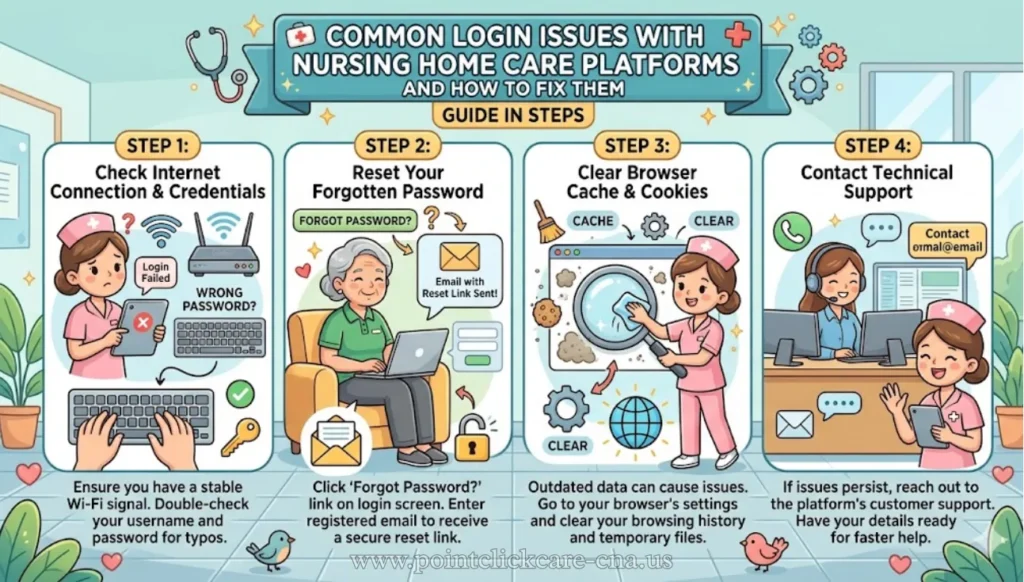
- Check the internet connection first to ensure it is stable.
- Re-enter the username and password carefully.
- Use the password reset option if login fails.
- Clear browser cache and cookies.
- Try logging in from another browser or device.
- Verify multi-factor authentication settings.
- Contact technical support if the issue continues.
Working through these steps in order helps identify the cause of the problem quickly.
How to Prevent Login Problems in the Future
Preventing login issues is just as important as fixing them. Simple habits can reduce errors and improve system reliability.
Strong password management plays a major role in prevention. Staff should create secure passwords that are easy to remember but difficult to guess. Sharing passwords between users should be avoided at all times.
Regular device updates also help maintain compatibility with modern software. Outdated systems are more likely to experience login errors and performance issues.
Standardizing browsers across the facility is another effective strategy. When all staff use approved browsers, compatibility issues are easier to manage.
Training sessions can also help staff understand correct login procedures and troubleshoot minor issues independently.
Best Practices for Secure and Smooth Platform Access
Balancing security and usability is essential in care environments. While strong protection is necessary to safeguard resident information, systems should remain easy to access during daily operations.
Role-based access control helps ensure that staff members only see information relevant to their duties. This reduces confusion and improves security.
Facilities should also maintain clear documentation for login procedures and support contacts. Having quick access to troubleshooting steps can save valuable time during busy shifts.
Regular IT maintenance improves system performance. Checking network strength, updating software, and reviewing login records help identify recurring problems before they become serious.
For example, if login delays happen every morning at the same time, the cause may be heavy system traffic rather than incorrect passwords.
When to Contact Technical Support
Technical support should be contacted when login problems cannot be solved using standard troubleshooting steps. Persistent errors often require administrative access to resolve.
Support teams should be involved when password resets fail repeatedly or accounts remain locked for longer than expected. They can also help correct permission settings and resolve authentication issues.
If multiple staff members experience login failures at the same time, it may indicate a system-wide outage. Reporting the issue quickly allows technical teams to investigate and restore service.
Immediate escalation is especially important when login failures affect critical activities such as medication management, resident documentation, or safeguarding records.
Quick Troubleshooting Checklist
Use this checklist when login problems occur:
- Check Wi-Fi or network connection.
- Verify username and password details.
- Use the password reset option if needed.
- Check spam or junk folders for reset emails.
- Clear browser cache and cookies.
- Try a different browser or device.
- Confirm multi-factor authentication settings.
- Wait briefly during peak login times.
- Ask the administrator to review account permissions.
- Contact technical support if the issue continues.
Frequently Asked Questions
Why does my account keep locking?
Your account may lock after repeated failed login attempts as a security measure. This usually happens when the wrong password is entered multiple times or the system detects suspicious activity.
What are skilled nursing software solutions?
These are digital platforms used in skilled nursing facilities to manage resident records, care plans, scheduling, billing, and documentation. They help staff coordinate care and maintain accurate records efficiently.
What is the message to nursing homes?
The key message is that access problems should be treated as urgent operational issues. Quick login recovery supports uninterrupted care, improves staff productivity, and reduces risks to resident safety.
What are the three most pressing issues facing nursing home facilities?
Common pressing issues include staffing shortages, maintaining care quality, and improving operational efficiency. Technology problems, such as login failures, can worsen these challenges by slowing workflows and communication.
What are the 3 C’s of healthcare?
The 3 C’s are communication, coordination, and continuity. These elements ensure that patient information flows correctly, care teams work together effectively, and residents receive consistent, ongoing treatment.
What software is most frequently used by medical practices?
Medical practices commonly use electronic health record systems, scheduling software, billing tools, and patient portals. Nursing homes use similar systems tailored for long-term care and resident management needs.
What is the most common problem in nursing homes?
Staffing shortages and operational strain are among the most common problems. Technology challenges, including login failures or system delays, can add stress and slow documentation and care delivery.
Why is care home management a problem?
Care home management is challenging because it involves coordinating staff, residents, compliance rules, and communication. Software or login failures make coordination harder and can disrupt daily care routines.
What if a nursing home does not assist?
If assistance is not provided, the issue should be escalated through internal reporting channels or to system administrators. Quick resolution is important to maintain safe operations and continuous resident care.
Why am I not receiving password reset emails?
Common reasons include spam filtering, incorrect email addresses, or expired reset links. Check spam folders, confirm your email details, and request a new reset link if necessary.
Why does login fail on mobile devices?
Weak internet signals, outdated apps, unsupported browsers, or authentication issues may cause mobile login failures. Updating the app, improving connectivity, or trying another browser often resolves the problem.
Final Thoughts
Login difficulties in nursing home care systems are frequent, yet most can be resolved with a clear, step-by-step method. Common causes include incorrect passwords, locked accounts, outdated browsers, heavy traffic during shift changes, and delays with multi-factor verification.
Begin by reviewing simple checks, then try password resets and browser fixes before contacting support. If the problem disrupts resident care, escalate immediately. Acting quickly keeps workflows smooth, protects data security, and supports reliable daily operations in modern care facilities and their dedicated staff.